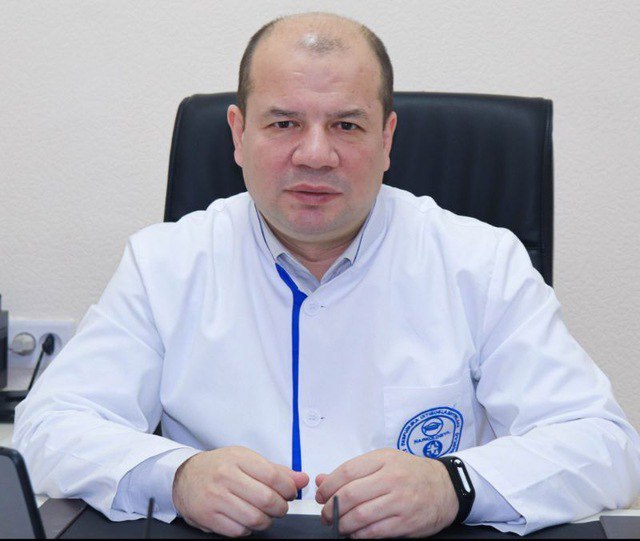
Academic Degree: Doctor of Medical Sciences
Academic Title: Professor
Affiliations:
1. Republican Specialized Scientific and Practical Medical Center of Narcology of the Republic of Uzbekistan
2. Association of Psychiatrists of Uzbekistan
3. Tashkent Medical Academy
4. Ministry of Health of the Republic of Uzbekistan
Positions:
1. Director
2. President
3. Head of the Department of Psychiatry and Narcology
4. Chief Narcologist
Research Interests: diagnosis and treatment of mental disorders and addictions.
Address: Tashkent, Uzbekistan
E-mail: zardil78@mail.ru, zarif.ashurov@tma.uz
Scopus Author ID: 36127345500
ORCID ID: 0000-0002-8322-3482
Education:
1995–2002 – Second Tashkent Medical Institute, Faculty of General Medicine
2002–2004 – Clinical Residency in Narcology at the Department of Psychiatry and Narcology, Second Tashkent State Medical Institute
2014 – Primary specialization course in Psychiatry at the Department of Psychiatry and Psychotherapy, Tashkent Institute for Advanced Medical Training
2010 – Candidate of Medical Sciences dissertation: «Clinical Features of Female Alcoholism with Different Types of Social Adaptation and Optimization of Differentiated Therapy», Tashkent
2017 – Doctor of Medical Sciences dissertation: «Clinical Features of Alcoholism and Drug Addiction in Patients with Deviant Behavior», Tashkent
2017 – Primary specialization course in Psychotherapy at the Department of Psychiatry and Psychotherapy, Tashkent Institute for Advanced Medical Training
Professional Experience:
Practicing physician. Chief Narcologist of the Ministry of Health of the Republic of Uzbekistan. Specializes in the diagnosis and treatment of a wide range of mental disorders, alcohol use disorder, drug addiction, substance abuse, gambling disorder, and other addictions. Author of over 50 scholarly publications, including 5 textbooks and clinical guidelines.
Research Focus:
Improvement of treatment, rehabilitation, and prevention strategies for psychoactive substance dependence, specifically alcohol use and opioid use disorders, in patients with deviant behaviour, accounting for premorbid clinical and psychopathological characteristics, along with individual biological and psychosocial factors. Development and optimization of diagnostic tools and therapeutic interventions for mental health disorders and of approaches to improving the provision of mental health care.